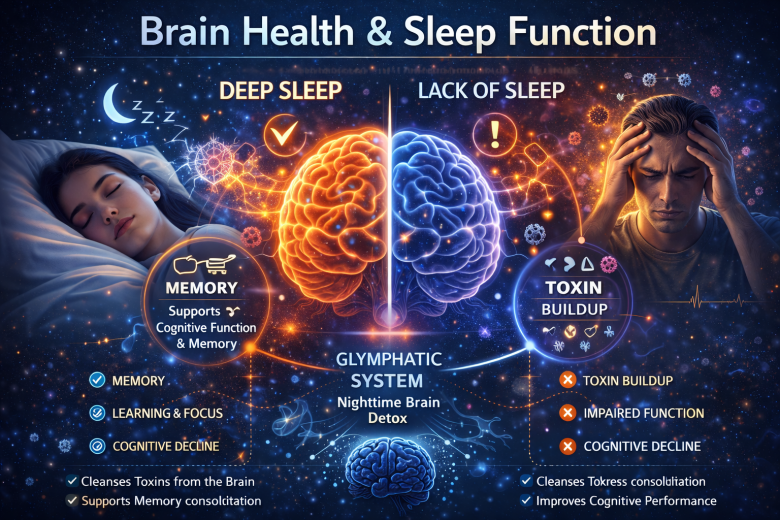
Sleep is not a passive state. It is an active biological process during which the brain reorganizes information, recalibrates emotional circuits, and restores metabolic balance. When sleep is shortened or fragmented, these processes become less efficient, and cognitive performance can suffer.
One of the most studied roles of sleep is memory consolidation. During certain sleep stages, especially slow-wave sleep and REM (rapid eye movement) sleep, the brain strengthens neural connections formed during the day. In simple terms, experiences and new information are “replayed” and stabilized. Insufficient sleep can disrupt this consolidation process, which may affect learning and recall.
Attention and reaction time are also highly sensitive to sleep duration. Even moderate sleep restriction over several days can reduce alertness and increase mental fatigue. Functional imaging studies show that areas of the brain responsible for executive function—such as the prefrontal cortex—become less active when sleep is limited. This may influence planning, impulse control, and decision-making.
Emotional regulation is another important factor. The amygdala, a brain structure involved in processing emotions, becomes more reactive when sleep is restricted. At the same time, its communication with regulatory regions of the brain weakens. This imbalance may contribute to increased irritability, stress sensitivity, or mood fluctuations.
Long-term patterns of insufficient sleep have also been associated in research with changes in metabolic clearance systems in the brain. During deep sleep, the brain activates a process sometimes called the glymphatic system, which helps remove metabolic byproducts. While research in this area is ongoing, adequate sleep appears to support normal brain maintenance processes.
Sleep is not a luxury. It is a biological requirement for optimal cognitive performance. Consistent, sufficient sleep helps maintain attention, learning capacity, and emotional balance over time.