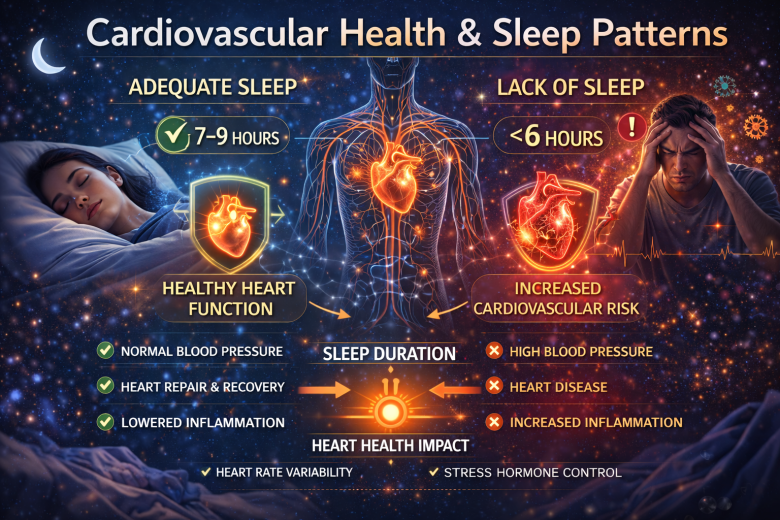
The cardiovascular system does not shut down during sleep. In fact, sleep provides a critical period of physiological regulation. Heart rate, blood pressure, and stress hormone levels typically follow circadian rhythms—natural 24-hour cycles that are closely linked to sleep patterns.
During healthy sleep, blood pressure usually decreases in a pattern known as “nocturnal dipping.” This temporary reduction gives blood vessels and the heart a period of relative rest. When sleep is consistently shortened or disrupted, this dipping pattern may be reduced or absent, which research has associated with higher cardiovascular strain over time.
Sleep duration has also been studied in relation to blood pressure regulation. Chronic short sleep has been linked in observational studies to elevated blood pressure and increased sympathetic nervous system activity. The sympathetic nervous system is responsible for the body’s “fight or flight” response, and prolonged activation may place additional stress on the heart.
Inflammation is another factor. Sleep restriction has been associated in some studies with changes in inflammatory markers. Since chronic inflammation plays a role in cardiovascular health, researchers continue to explore how sleep patterns may influence long-term heart function.
Metabolic regulation is closely connected as well. Insufficient sleep can affect glucose metabolism and appetite-regulating hormones. Over time, these changes may contribute to weight gain or metabolic imbalance, both of which are recognized cardiovascular risk factors.
It is important to emphasize that sleep is one component of a broader lifestyle picture. Nutrition, physical activity, smoking status, stress levels, and genetic factors all influence heart health. However, maintaining consistent sleep duration and quality appears to be an important supportive factor in overall cardiovascular regulation.
Healthy sleep habits are not a substitute for medical care, but they are part of a comprehensive approach to maintaining heart health over the long term.